Breathe with the square for one minute. That is the whole app.
Breathe in as the dot climbs, hold across the top, breathe out on the way down, hold along the bottom. Four rounds take about a minute.
Runs in your browser. Nothing is tracked, nothing is sent anywhere.


Free. Requires iOS 26.
I made this for my own ADHD brain. It needs exactly one job, and following a box is one job.
What the app adds
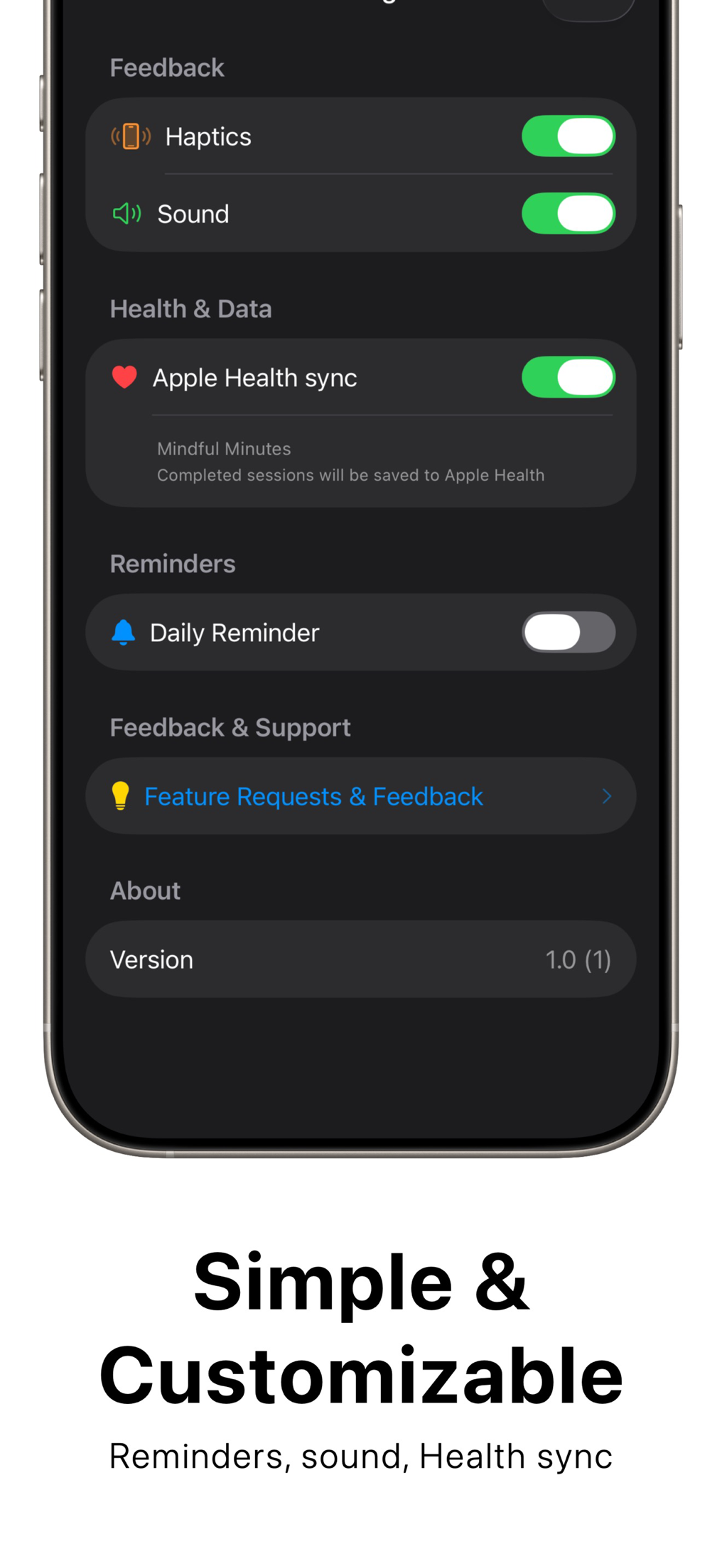
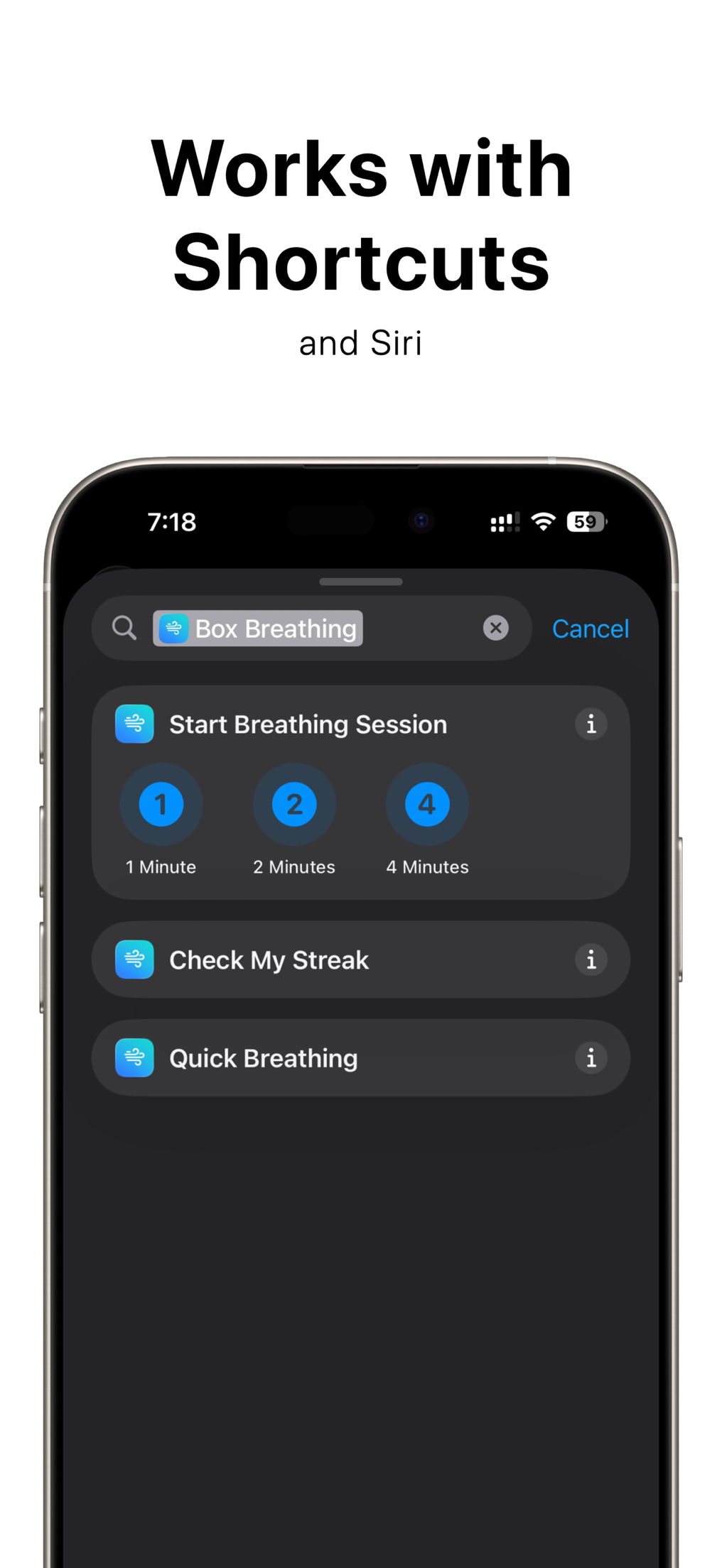
Haptics you can follow with your eyes closed, daily streaks and reminders, mindful minutes synced to Apple Health, and Siri Shortcuts so a session is one voice command away. No content library, no ten-minute meditations to abandon.
How a session goes
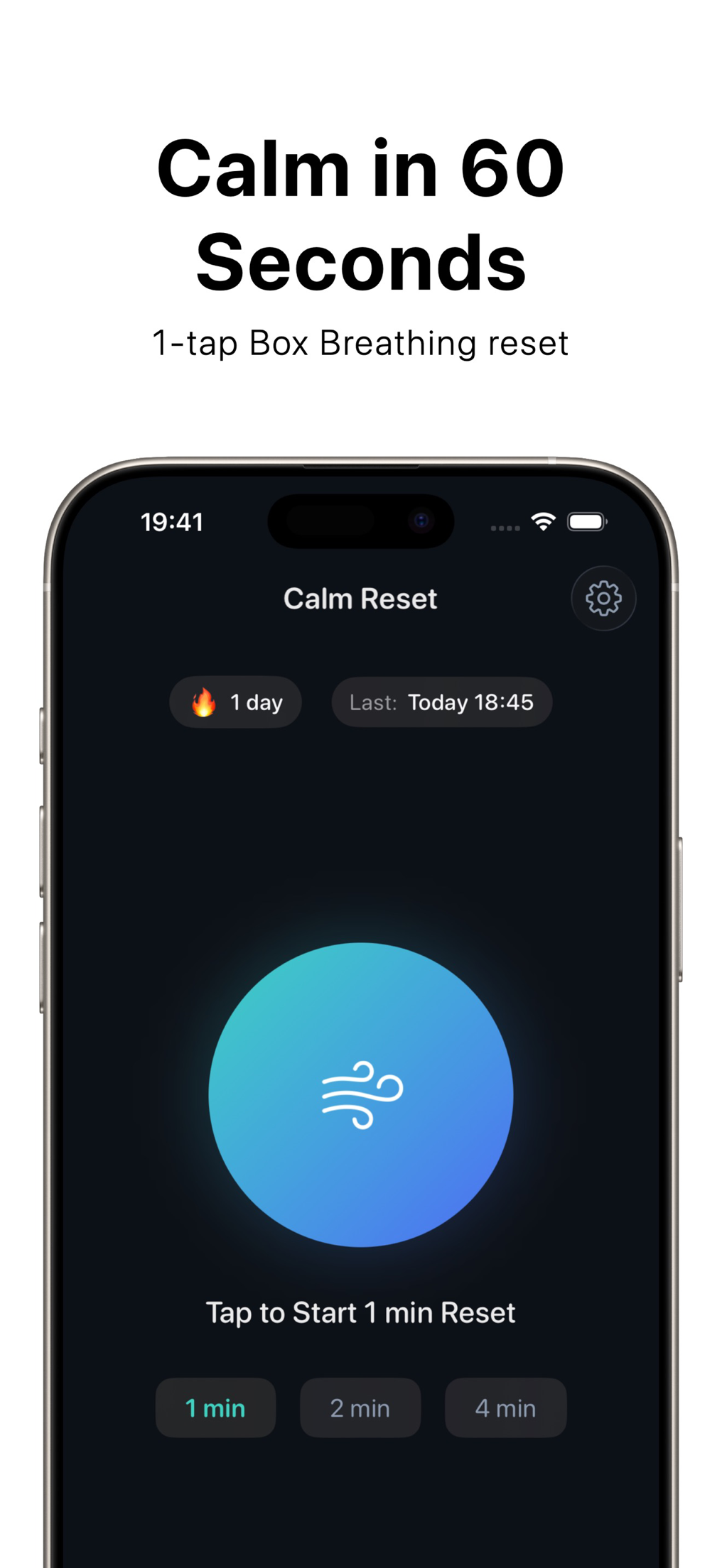
Tap start
No setup, no course, no account. Open the app and tap once. The default session is a single minute, short enough that an ADHD brain will actually do it, today and tomorrow.
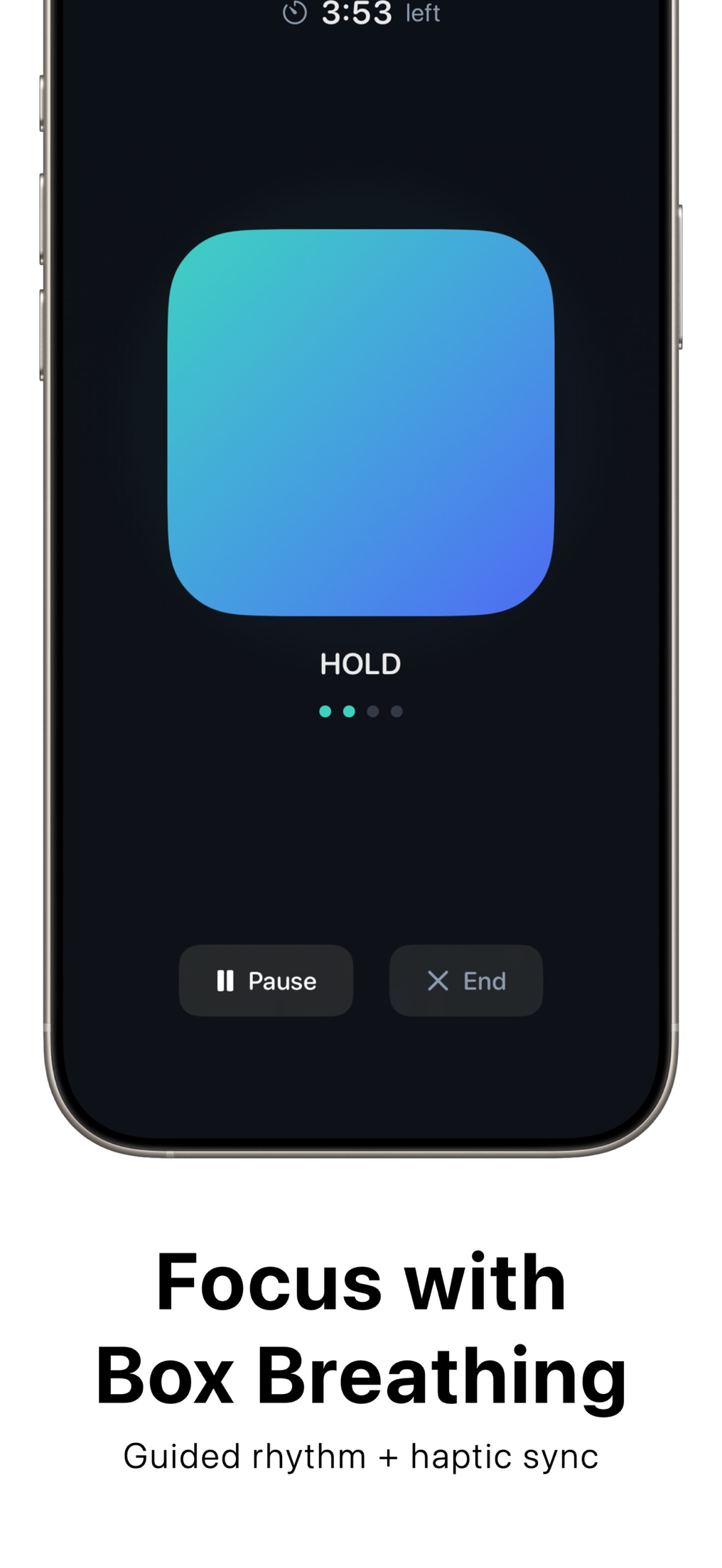
Follow the box
Inhale 4, hold 4, exhale 4, hold 4. The animated square shows the rhythm and gentle haptics tap it into your hand, so you can close your eyes and still stay on count.
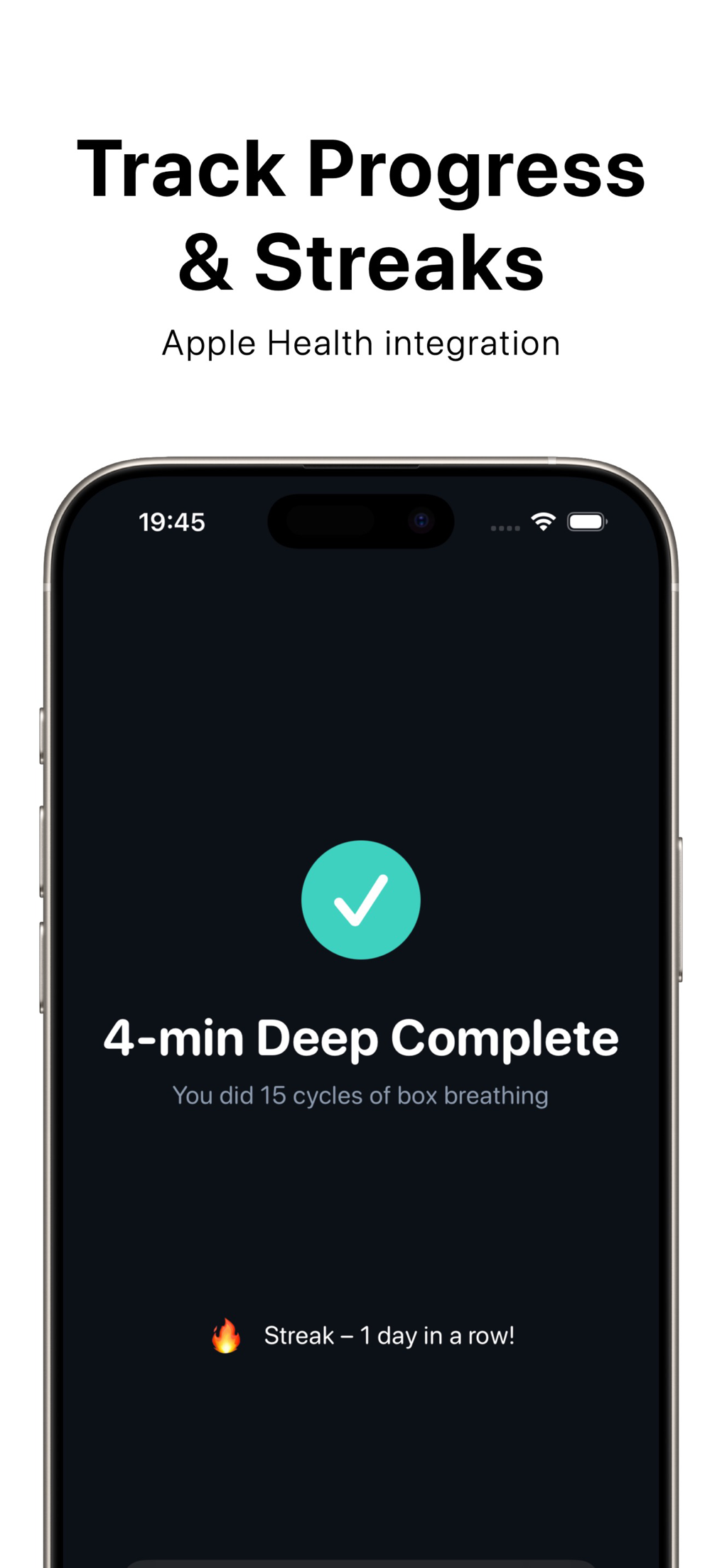
Build the streak
Daily streaks, smart reminders, and Apple Health mindful minutes turn a one-minute reset into a habit. Automate it with Siri Shortcuts: after your morning alarm, before deep work, whenever you need it.
- Guided 4-4-4-4 box breathing
- Visual square plus haptic guidance
- One-minute default sessions
- Daily streaks and reminders
- Apple Health mindful minutes sync
- Siri Shortcuts automation
- No feed, no content library, no noise
- Free to download
- Built for ADHD attention spans
Guides
The questions ADHD adults actually search for, answered plainly, each with the exact way to practice it in one minute a day.
Box Breathing for ADHD
Why a counting square works when "just relax" never has: the mechanism, the method, and a one-minute daily protocol.
Read the guide ADHDBreathing Exercises for ADHD Adults
Five techniques compared, which one fits which moment, and how to make any of them stick with an ADHD brain.
Read the guide OverwhelmHow to Calm an ADHD Mind
A four-step reset for racing thoughts: ground the body, empty the head, cut the input, and restart on one thing.
Read the guide OverthinkingHow to Stop Overthinking With ADHD
Why ADHD brains ruminate, the interrupt-capture-redirect loop that breaks the spiral, and what to do at 2am.
Read the guide AnxietyBox Breathing for Anxiety
The technique Navy SEALs use under fire, why the holds matter, and how to adapt the count when anxiety spikes.
Read the guide SleepBox Breathing for Sleep
How to use the box as a wind-down ritual, when to stretch the exhale, and a 10-minute pre-bed routine.
Read the guide Comparison4-7-8 vs Box Breathing
Two famous techniques, two different jobs. Which one to use for sleep, anxiety, focus, and ADHD, with a comparison table.
Read the guideQuestions
What is box breathing?
Box breathing is a four-step breathing technique: inhale for 4 seconds, hold for 4, exhale for 4, and hold for 4 before the next breath. The four equal sides give it its name. It slows your breathing to about four breaths a minute, which calms the nervous system and gives a busy mind one simple thing to track. Learn more
Is box breathing good for ADHD?
Yes, as a self-regulation tool. The counting and the visual rhythm give a wandering ADHD mind a concrete job, and one minute is short enough to actually finish. It reduces overwhelm and helps you reset between tasks, but it is a coping skill, not a treatment or a replacement for professional ADHD care. Learn more
How long should a box breathing session be?
One minute is enough to feel a shift, which is about four full cycles at the classic 4-4-4-4 count. For a deeper reset, three to five minutes works well. Short and daily beats long and occasional, especially with ADHD. Learn more
Does box breathing help with anxiety?
Yes. Slow, paced breathing with holds activates the parasympathetic nervous system, the body's brake pedal. Box breathing is the version Navy SEALs are taught for staying calm under stress. For an active anxiety spike, shorten the holds or drop them until the wave passes. Learn more
Which is better for sleep, box breathing or 4-7-8?
For falling asleep, 4-7-8 has the edge because its long exhale is more sedating. Box breathing is better during the day, when you want calm focus rather than drowsiness. Many people use box breathing at their desk and 4-7-8 in bed. Learn more
Can breathing exercises replace ADHD medication?
No. Breathing exercises regulate arousal and stress in the moment; they do not treat the underlying condition. Think of box breathing as one tool in a kit that can also include medication, therapy, exercise, and sleep. Always talk to your clinician before changing treatment. Learn more
Why four seconds per side?
Four seconds per side puts you at roughly four breaths a minute, deep in the slow-breathing range where heart rate variability rises and the stress response quiets down. The count is also short enough to hold in working memory without strain. If four feels hard, start at three; the rhythm matters more than the number. Learn more
How do I calm a racing ADHD mind at night?
Get the thoughts out of your head and slow the body down. Write down everything circling in your mind, then run a few minutes of slow breathing with a long exhale to downshift your nervous system. A consistent wind-down cue, done nightly, trains your brain to associate it with sleep. Learn more
Is the Box Breathing app free?
Yes. Box Breathing is free to download on the App Store and a guided session takes one tap. It includes visual and haptic guidance, daily streaks, reminders, Apple Health sync, and Siri Shortcuts automation. Requires iOS 26. Learn more
Does the app track my data?
The free timer on this page runs entirely in your browser and sends nothing anywhere. The app syncs mindful minutes to Apple Health only if you turn that on, and your streak data lives on your device. Learn more
Put it on your phone
You just did the whole technique in the browser. The app adds haptics you can follow with your eyes closed, streaks, and reminders. Free, one tap to start.